Healthcare overload makes the abstract result intuitive.
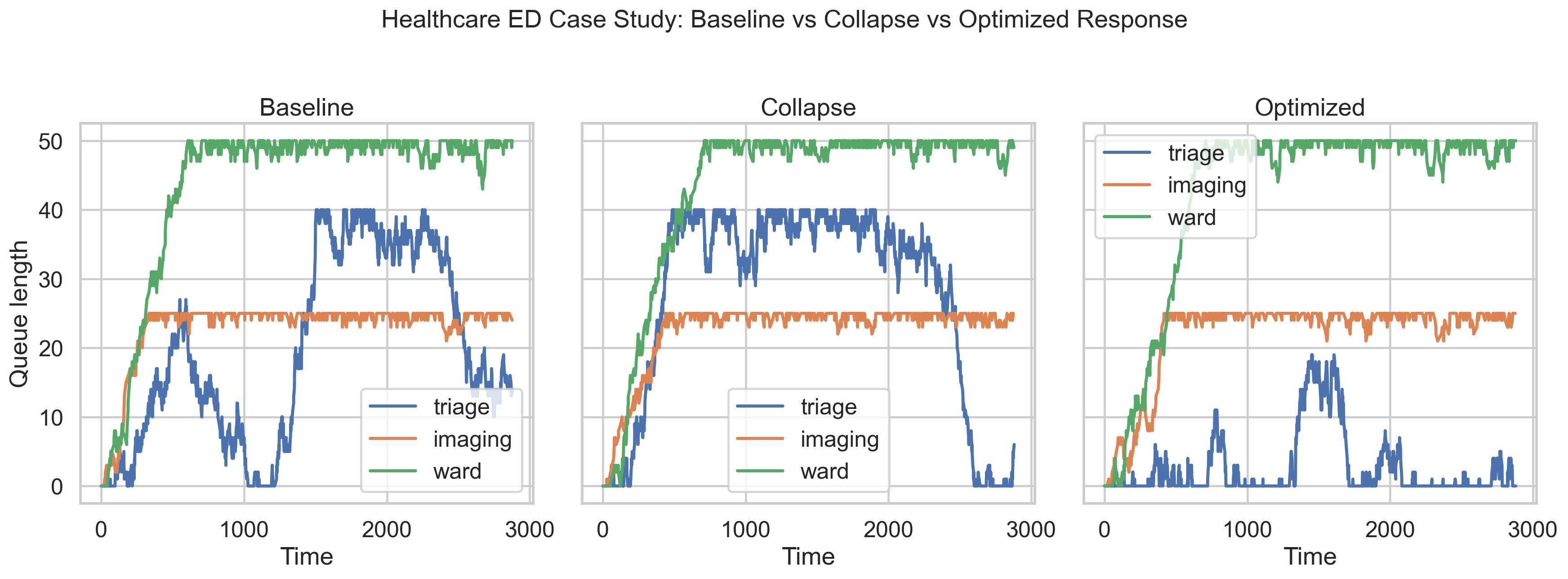
The broad synthetic studies provide the science. The healthcare ED case provides the story: queues build, flow locks up, bottlenecks emerge, and intervention quality depends on how close the system already is to the utilization cliff.
What the case shows
- Baseline behavior remains serviceable under normal load.
- Worst-case stress pushes the system into visible overload and queue growth.
- Optimization identifies interventions that restore throughput and reduce bottleneck pressure.
- The follow-up family shows collapse turning on around a 0.98x arrival multiplier and saturating by about 1.20x.
Why this matters
The healthcare case is useful because it translates the abstract "utilization-led collapse" result into something operational teams already understand: once effective arrival pressure gets too close to service capacity, the system stops being forgiving.
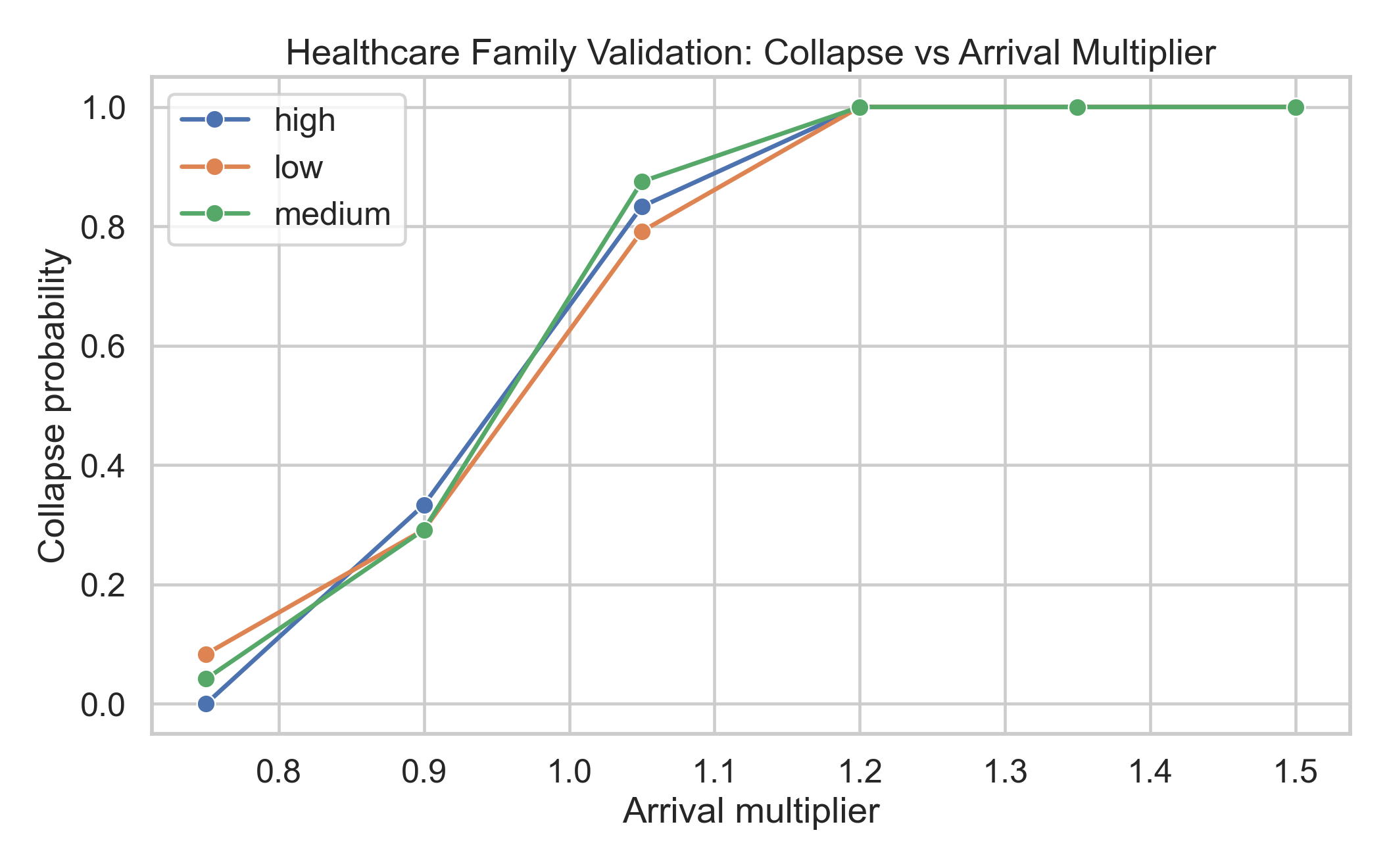
Threshold validation
The same cliff shape appears in the healthcare family when arrival intensity is swept systematically.
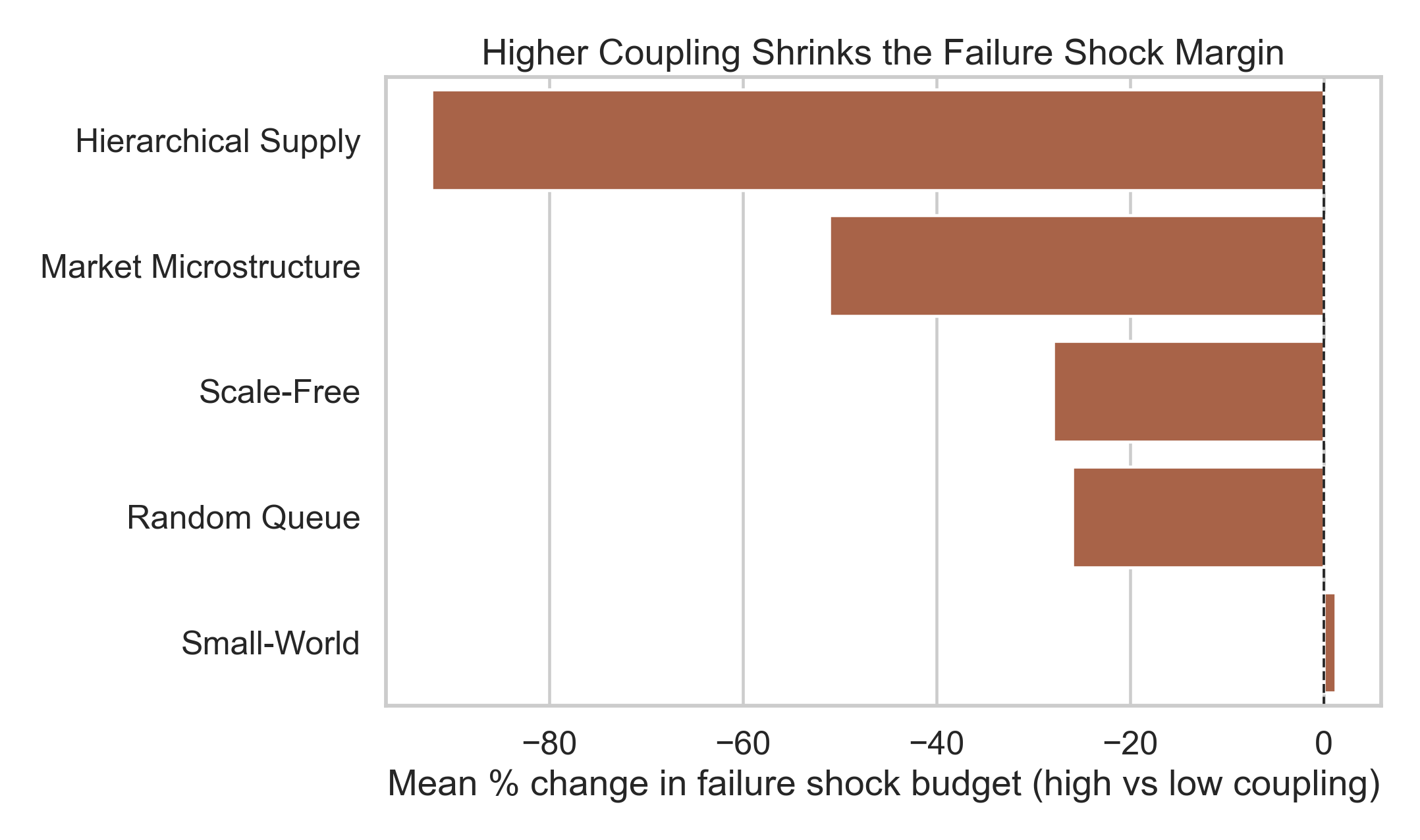
Operational interpretation
Even when coupling does not move the cliff much, it reduces how much extra stress the system can absorb before failing.
Demo storyline
Start with the synthetic main result. Then switch to this case and show the baseline, stressed, and optimized trajectories. That sequence makes the project legible both as research and as decision support.