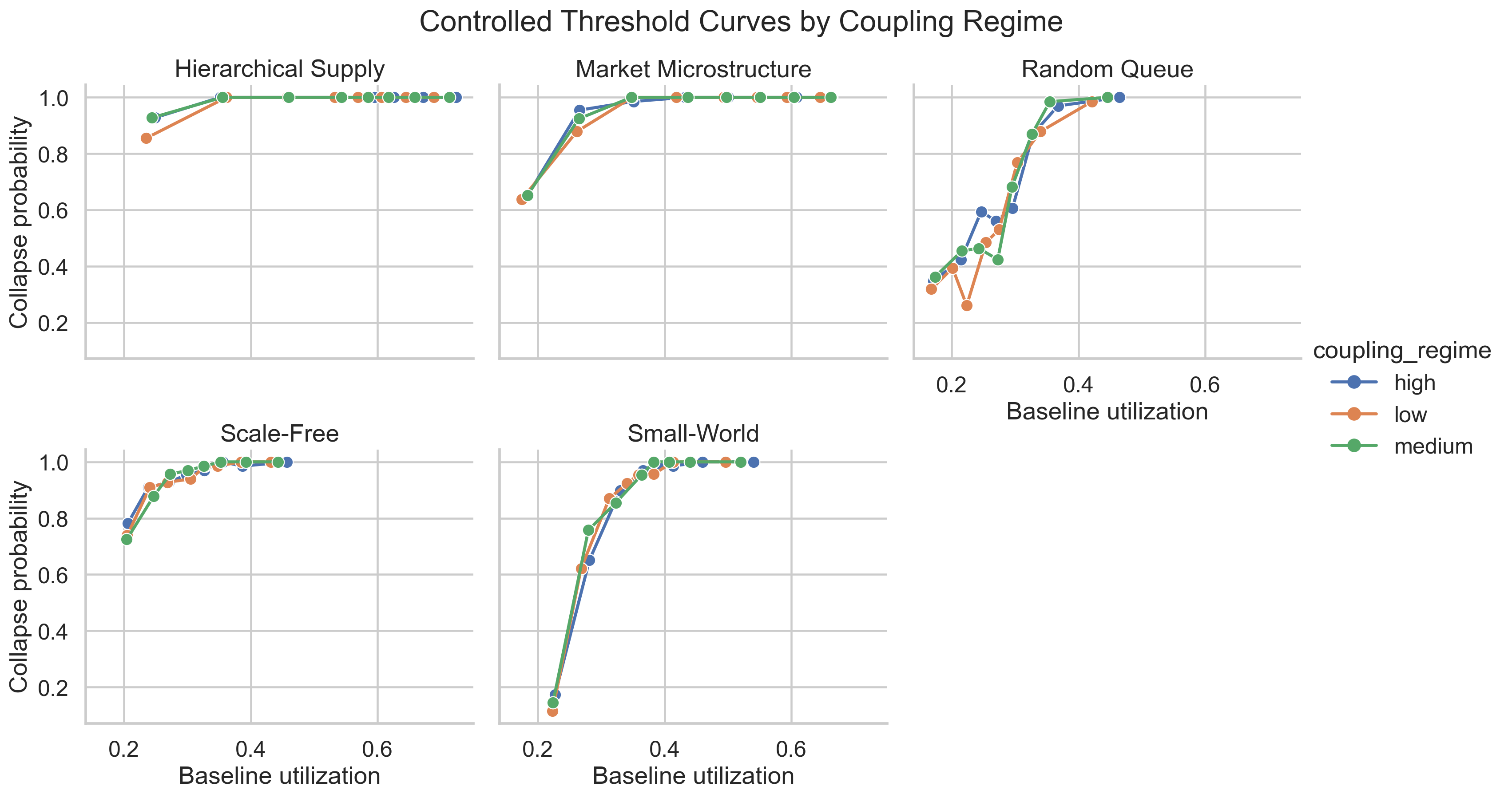
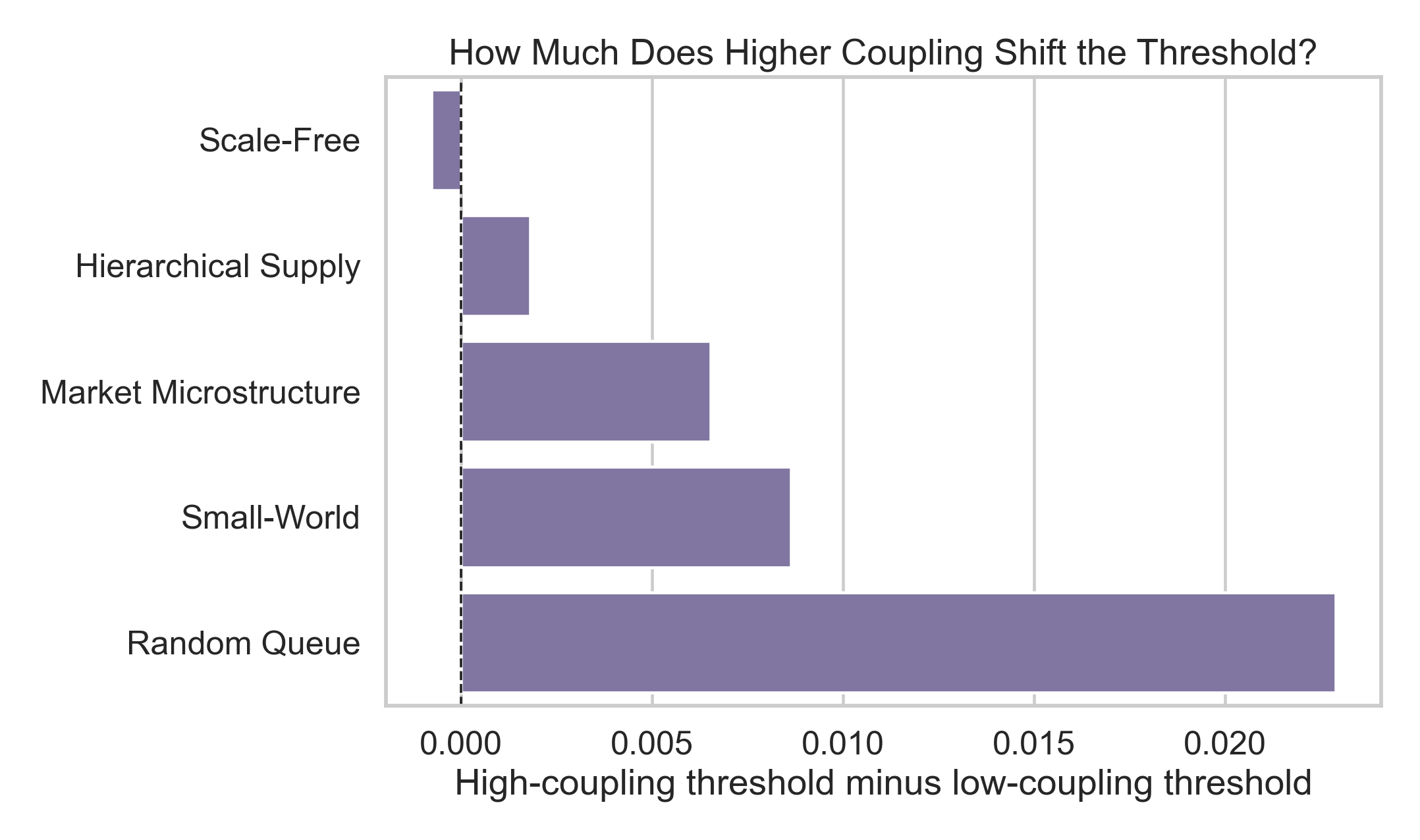
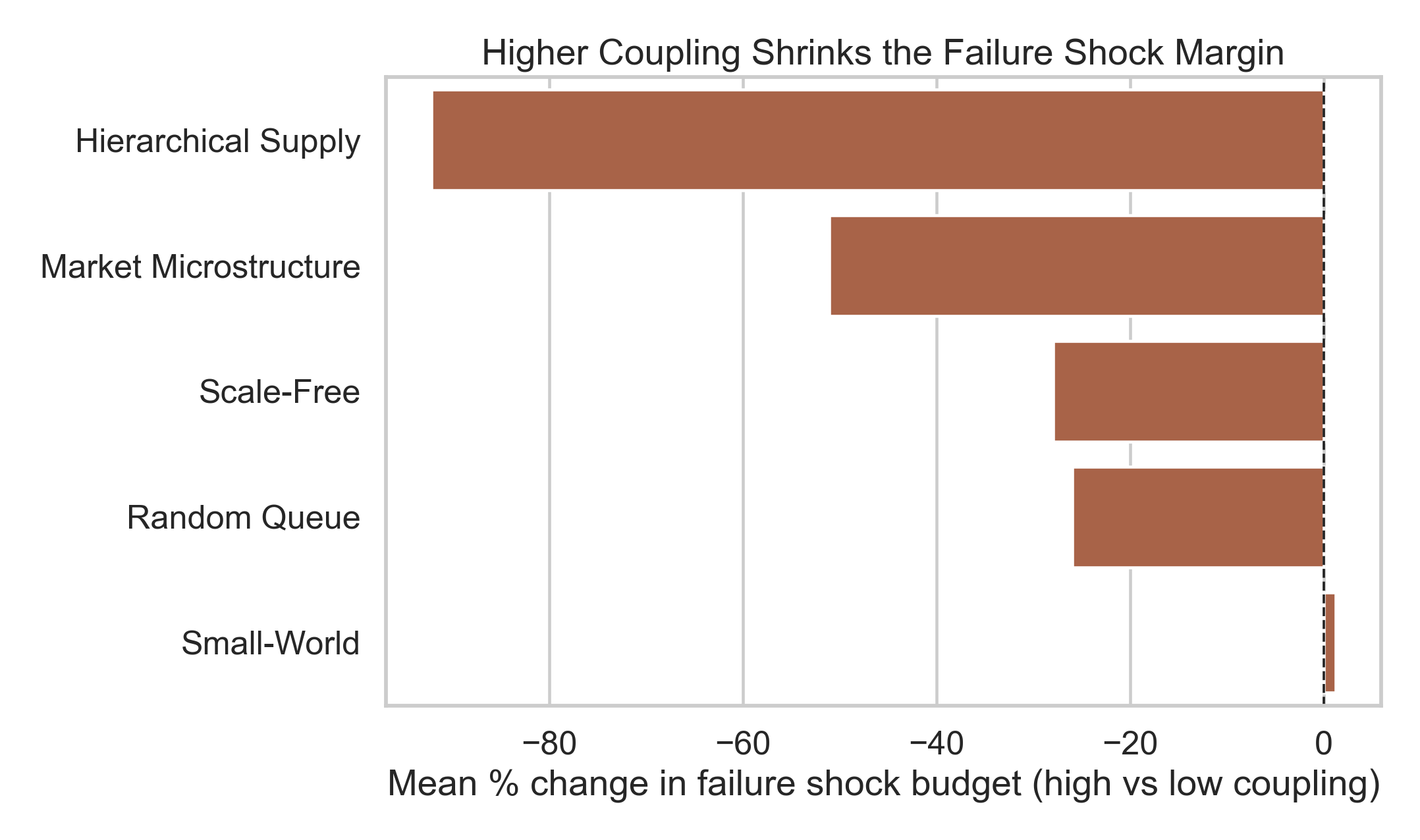
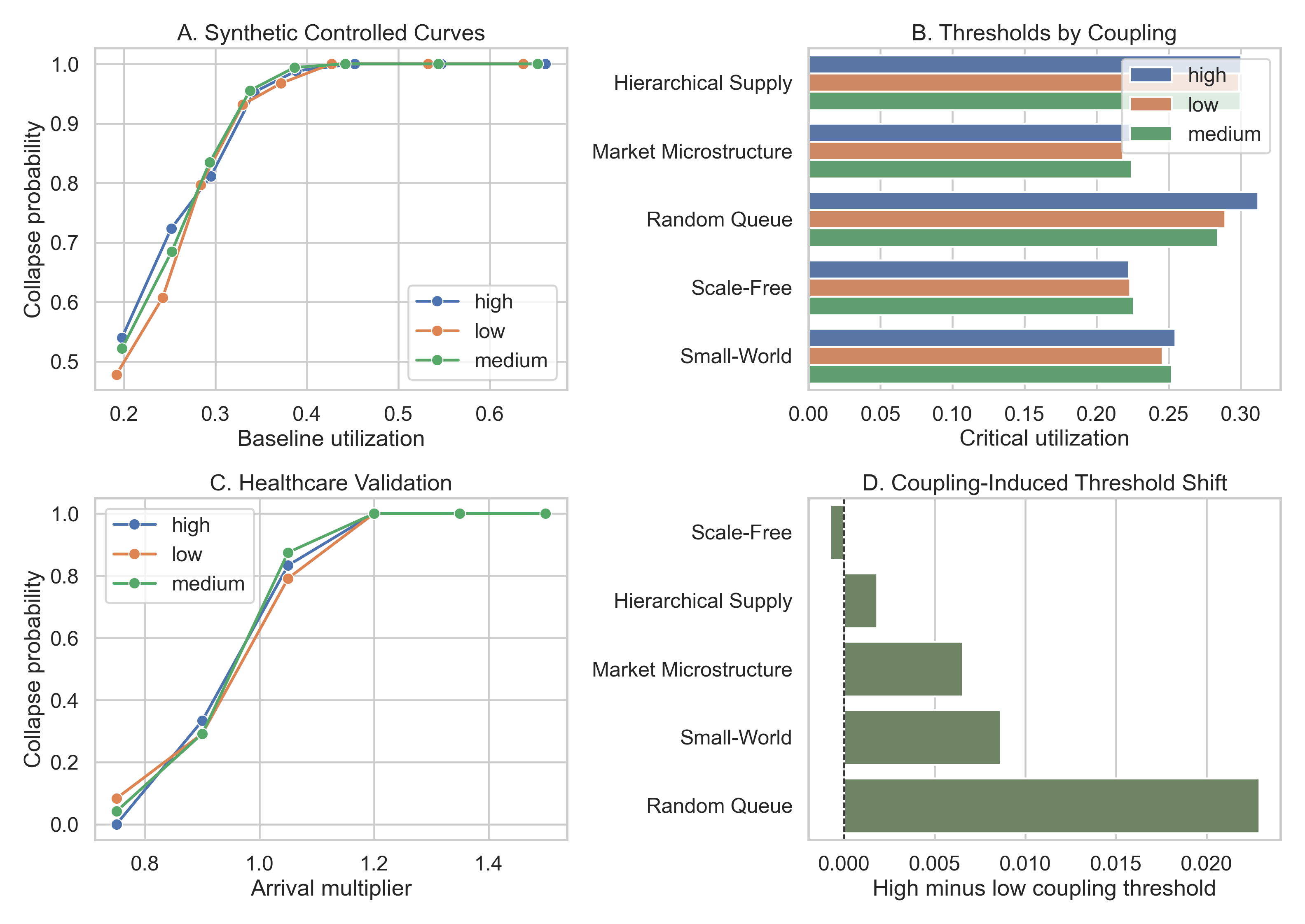
In the controlled follow-up sweep over 2,700 fixed-size synthetic systems plus 144 healthcare variants, StressLab found that the collapse threshold stays primarily utilization-led, while higher coupling shifts it only modestly on average (0.008 utilization points) but reduces the shock margin to failure by about 39.2%.
In the controlled synthetic study, the utilization threshold remains the main driver of collapse, with a median controlled threshold near 0.252.
Changing coupling shifts the threshold, but only modestly on average: the mean high-minus-low coupling shift is 0.008 utilization points, with the largest absolute shift at 0.023.
Higher coupling still matters operationally because it shrinks the minimum shock-to-failure margin by about 39.2% on average across the controlled synthetic grid.
That follow-up result weakens any claim that raw coupling alone sets the universal threshold; coupling acts more like a modifier on a utilization-led transition and a reducer of failure margin.
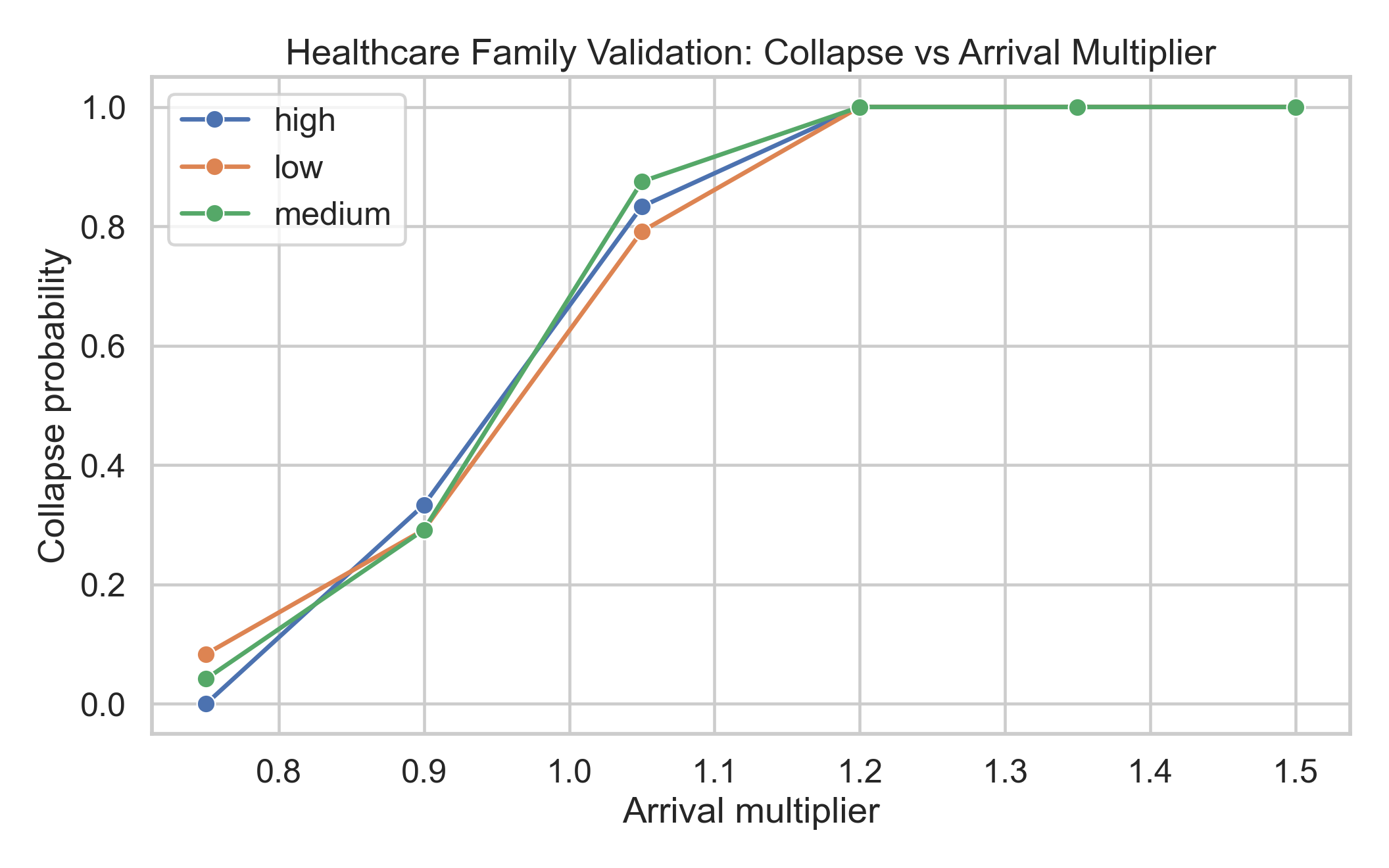
The healthcare validation family shows the same qualitative shape in operational terms: collapse turns on around a 0.98x arrival multiplier and is essentially saturated by 1.20x, which supports the portability of the utilization-threshold result beyond purely synthetic systems.
Controlled synthetic collapse curves by topology and coupling regime.Estimated threshold shifts between low and high coupling regimes.How higher coupling changes the minimum shock required to trigger failure.Healthcare ED family collapse curves under utilization and dependency coupling sweeps.Multi-panel summary of the controlled follow-up study.