Blockchain + Machine Learning Healthcare Fraud Ledger
Overview
Built a full fraud-scoring and audit system by combining an XGBoost model with a custom Python blockchain ledger. Scored 1,000+ insurance claims for fraud risk, then stored each claim as a tamper-evident block to create a transparent, auditable record of high-risk activity. Designed the entire pipeline end-to-end with scoring, hashing, validation, and a Streamlit dashboard for analysts.
What I Did
- Defined the business objective, metric targets, and analysis scope.
- Built and validated the data, modeling, and reporting workflow.
- Packaged outputs for stakeholder interpretation and decision support.
Results/Impact
Delivered an analysis workflow with decision-ready outputs and reusable artifacts.
Tech Stack
- Blockchain, Data Science, Fraud Analytics, Machine Learning, Transparency
Deliverables
- Project brief: (add file)
- Slides/report: (add file)
- Dashboard/model file: (add file)
- SQL/notebook/code bundle: (add file)
Project Notes
Description: Built a full fraud-scoring and audit system by combining an XGBoost model with a custom Python blockchain ledger. Scored 1,000+ insurance claims for fraud risk, then stored each claim as a tamper-evident block to create a transparent, auditable record of high-risk activity. Designed the entire pipeline end-to-end with scoring, hashing, validation, and a Streamlit dashboard for analysts. Skills Demonstrated: Blockchain, Data Science, Fraud Analytics, Machine Learning, Transparency Project Status: Planning
Why I Built This
Healthcare has always been personal for me.
I grew up around systems that weren-t always transparent or reliable, and I lost my dad partly because of failures in that system. Years later, being treated at Mayo Clinic showed me the opposite, what excellent healthcare feels like when it works the way it should.
Those two experiences shaped how I think about healthcare,
good systems save lives, and broken ones cost them.
This project is my way of exploring that intersection using data, machine learning, and even blockchain (yes, actual blockchain, not crypto hype) to build a more transparent, trustworthy way to detect and audit fraudulent healthcare claims.
I wanted to create something that felt like a real internal tool, not a school assignment. Something with structure, risk scoring, integrity checks, and analytics that someone in healthcare operations could actually use.
This system takes real insurance claims data from Kaggle, predicts fraud using a trained XGBoost model, and stores each claim inside a custom blockchain ledger I built from scratch.
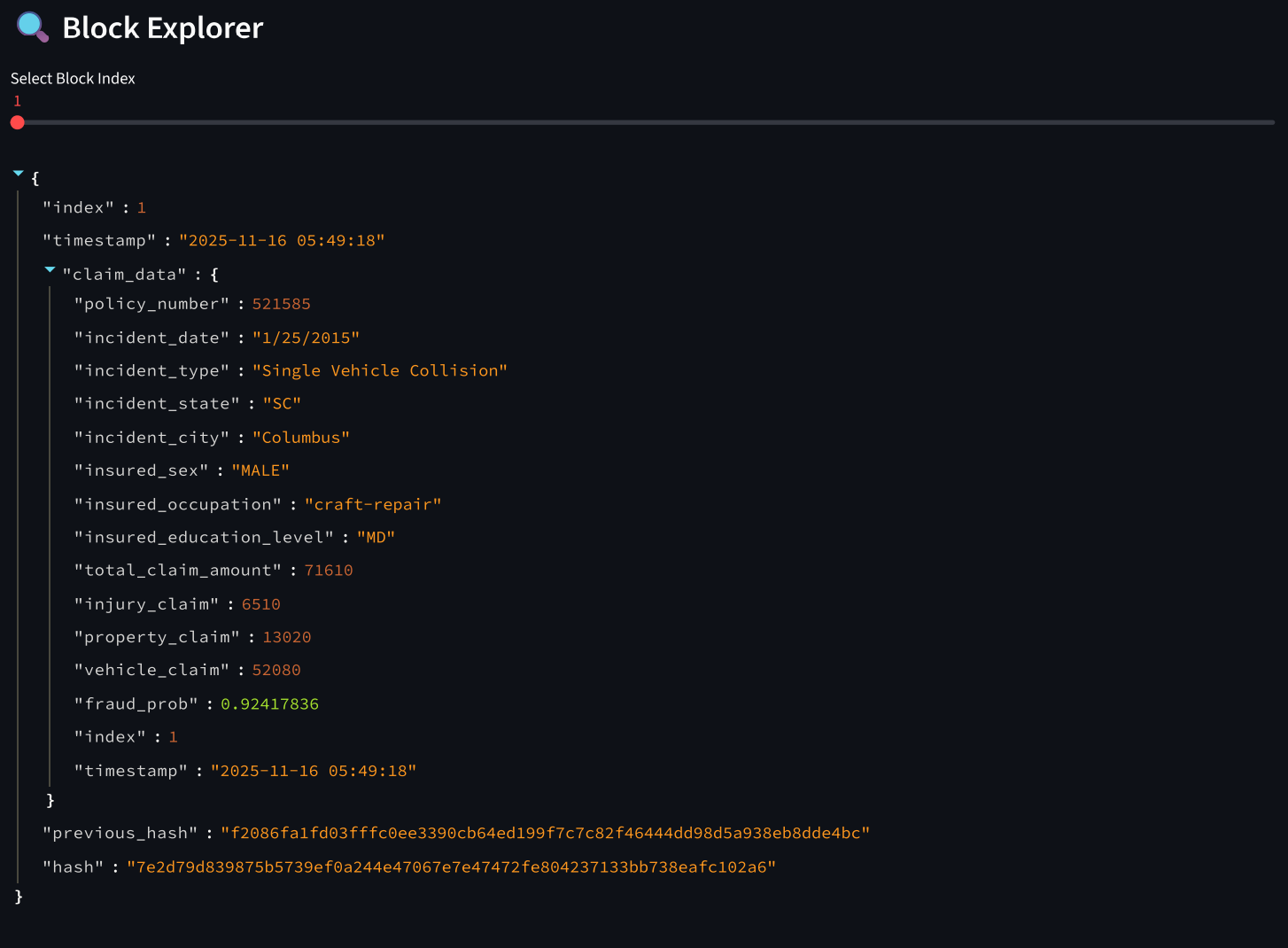
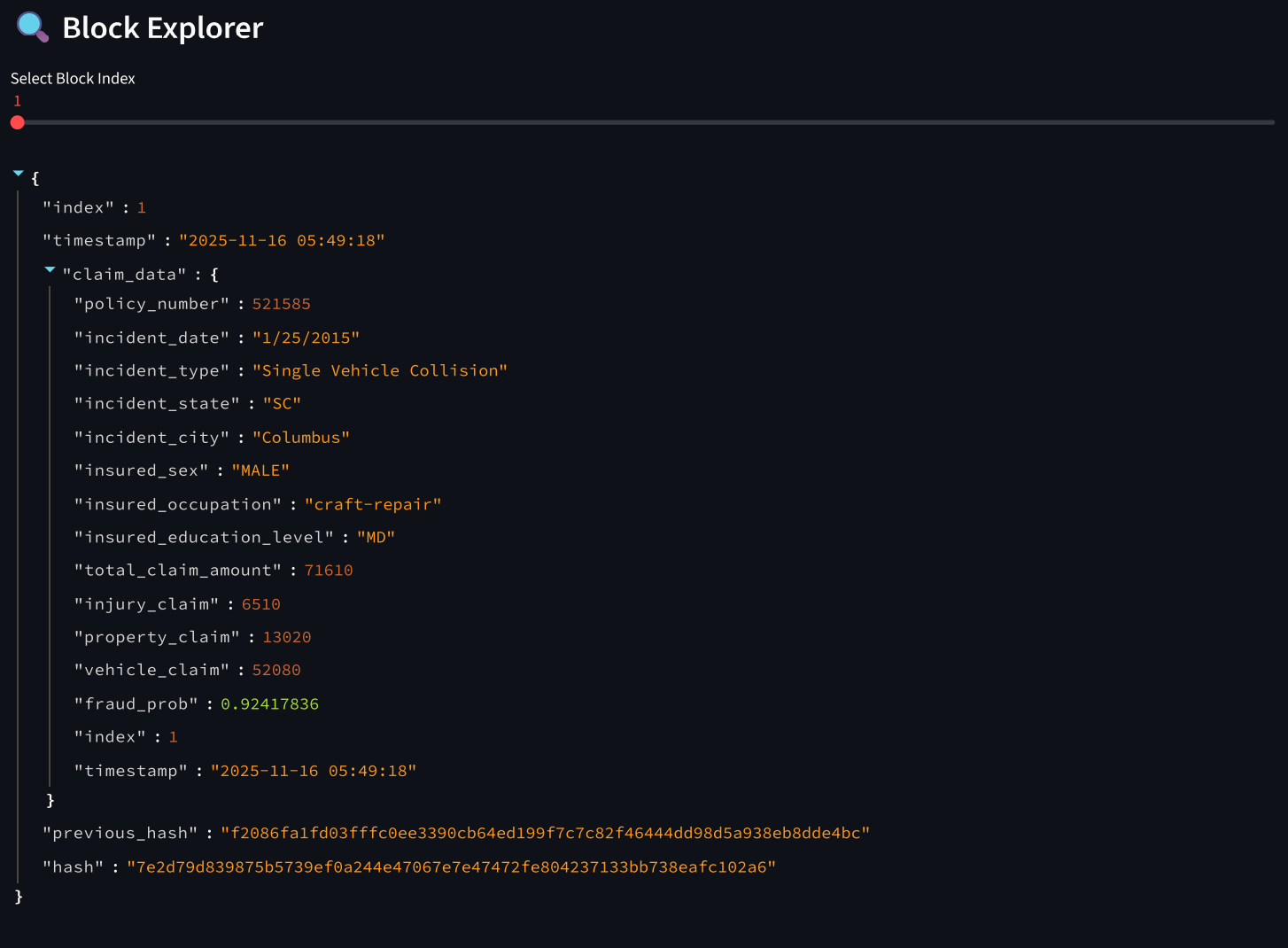
Every claim becomes a -block- that contains:
- key claim metadata
- financial information
- the ML model-s fraud probability
- timestamp
- SHA-256 hash of the block
- previous block-s hash
Together, they form a tamper-evident audit ledger.
If someone tries to modify a claim or alter a fraud score, the entire chain breaks.
That-s the entire point: trust through structure.
1. ML Scoring Pipeline
I trained an XGBoost model on structured claims data.
It processes fields like:
- incident type
- insured occupation
- claim amounts
- injury/property/vehicle damage
- incident severity
- and more
It outputs a fraud probability:
proba = model.predict_proba(df)[:, 1]
df["fraud_prob"] = proba
The scored dataset becomes the input to the blockchain.

2. Custom Blockchain Implementation
I implemented the blockchain manually using Python, no libraries, no shortcuts.
Each block is hashed:
hashlib.sha256(block_string.encode()).hexdigest()And each block links to the previous one:
new_block.previous_hash = last_block.hashIf even one number changes, the entire chain becomes invalid.
This turned out to be my favorite part because it forced me to think like a systems engineer, not just a data scientist.
3. Fraud Ledger Export
The ledger (1,001 blocks including genesis) is exported to a JSON file:
data/processed/chain_output.jsonThis is the -source of truth- for the whole system.
4. Interactive Dashboard
Using Streamlit, I built a simple dashboard to visualize:
- total claims
- high-risk claims
- total exposure
- fraud probability distribution
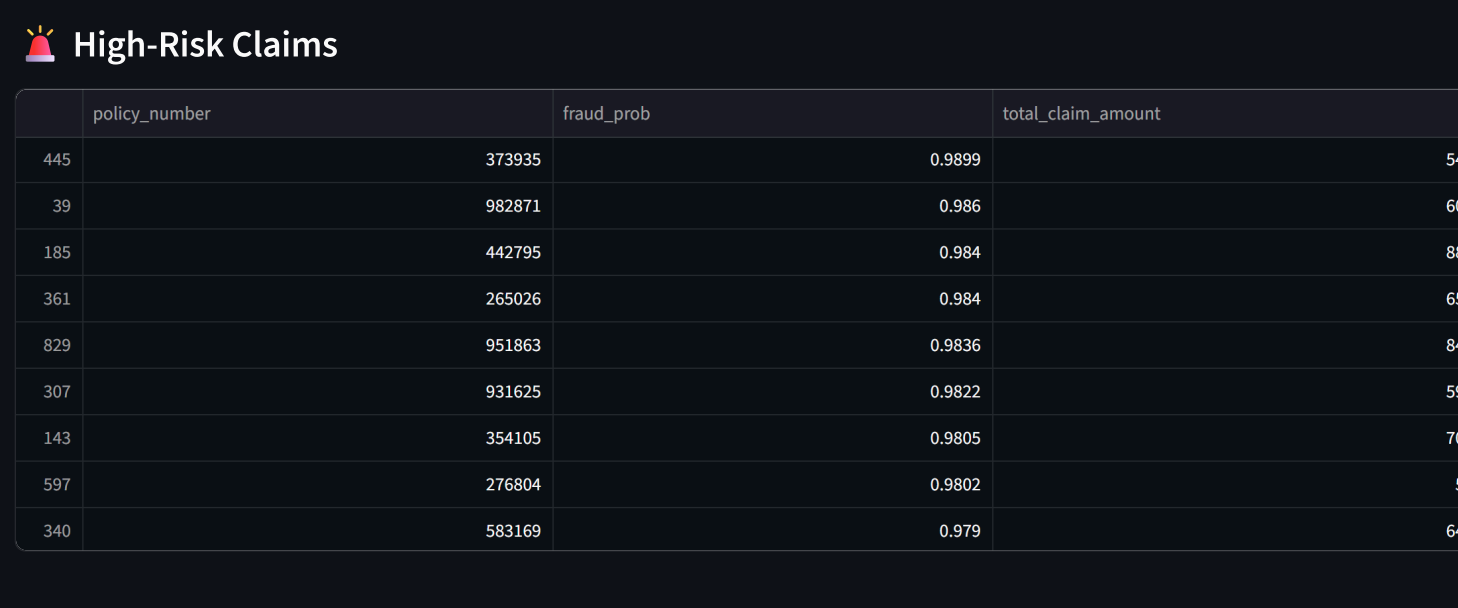
- a high-risk claims table
- a block explorer (view a single block-s content)
It-s not over-engineered, it-s exactly what a fraud analyst would want to look at.

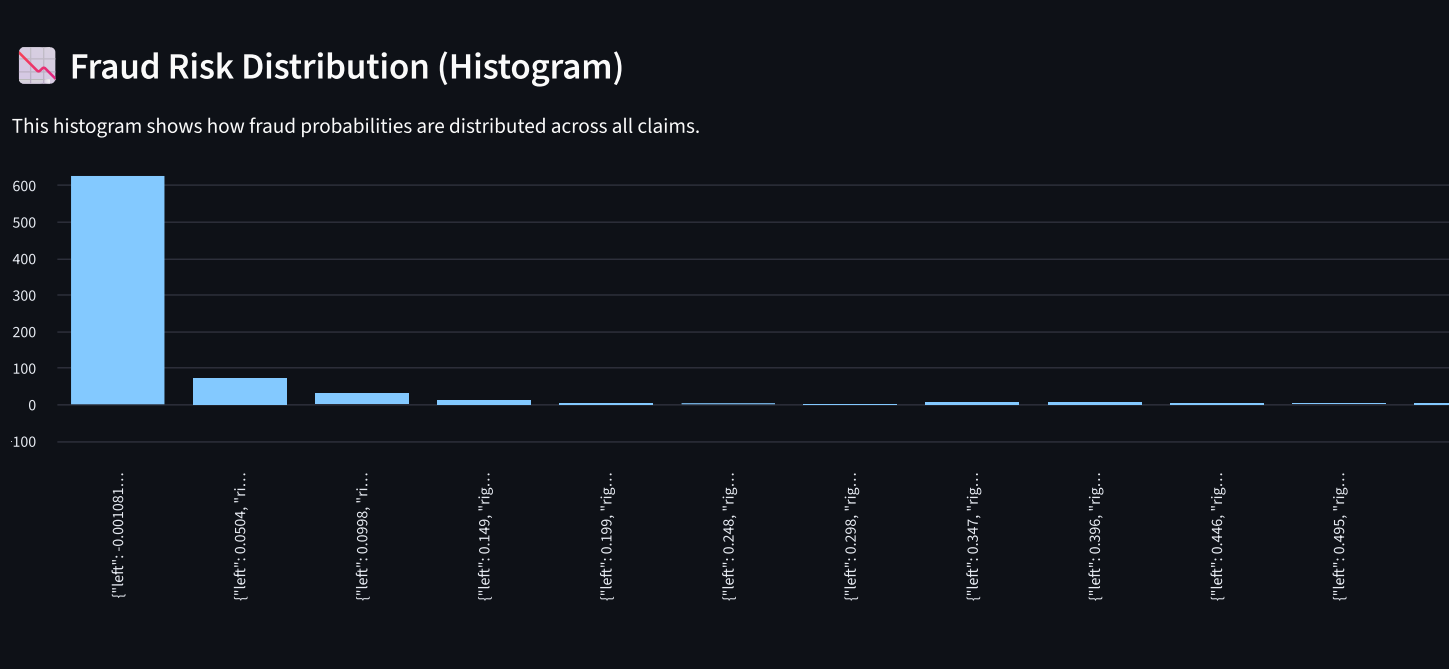
Working with the full pipeline revealed patterns I never would-ve noticed by just looking at the CSV:
- 22.3% of claims were high-risk (>0.70)
- Total financial exposure was ~$52.7M
- Multi-vehicle collisions and single-vehicle collisions were the most common incident types
- Fraud risk varies pretty widely across states
- The top 5 riskiest claims had fraud probabilities between 0.983-0.990
These aren-t -perfect- findings, but they-re real, and they demonstrate how ML + structured auditing can complement each other.
This project reinforced a few big lessons for me:
1. ML is just one piece of a system.
A model without structure or oversight is basically a guessing engine.
Putting it inside an auditable pipeline made it feel like it had purpose.
2. Transparency matters.
Being able to prove that data hasn-t been changed, or detect when it has, matters in healthcare.
3. Good engineering feels like building trust.
Hashing, linking, validating - these aren-t -just code.-
They-re mechanisms to enforce honesty.
4. My best work happens when it ties back to something personal.
This project meant more because of why I built it.
app/                    - pipeline scripts
blockchain/             - custom blockchain core
ml/                     - model loading + scoring
models/                 - trained XGBoost fraud model
data/raw                - original claims
data/processed          - scored claims + blockchain ledger
streamlit_app.py        - dashboard
I-d add:
- provider-level fraud analytics
- real anomaly detection (cluster-based)
- per-block SHAP explanations
- a real-time API
- a tamper-detection demo button in the dashboard
But honestly, for now, I-m happy with where this landed.
This project started as -what if I combined ML with a blockchain-
and ended as something that genuinely reflects what I care about:
- using data to improve healthcare
- building systems that enforce trust
- designing tools that could help real analysts
- and pushing myself beyond just training models
And I-m proud of it.
If you want to talk to me about this project or anything related to healthcare, ML, or fraud detection, I-m always open to conversations.
Markuss Saule